Minerals are essential for nearly every biological process in the human body. They contribute to hormone production, immune defence, energy metabolism, bone formation, and cellular protection against oxidative stress. Even mild deficiencies can influence health, yet many people are not aware of how common suboptimal mineral levels have become. Modern farming practices, limited dietary diversity, and food processing have made it increasingly difficult to obtain all essential minerals through food alone. Understanding why minerals are necessary and how to optimise intake is vital for supporting long-term health.
The Role of Minerals in the Body
Essential minerals are derived from metals and salts present in soil and water. Plants absorb them through their roots, and humans obtain them through food and drink. They are required in small amounts, but their functions are wide-ranging:
- Supporting the formation of protein, bone, and cartilage
- Regulating thyroid and other hormone production
- Contributing to energy-yielding metabolism and carbohydrate processing
- Supporting cognitive function and brain health
- Aiding in fertility, testosterone production, and reproductive health
- Maintaining the nervous system, vision, skin, hair, nails, and teeth
- Supporting immune defences and antioxidant enzyme systems
Minerals such as zinc, selenium, iodine, magnesium, copper, and manganese are also critical for activating enzymes that neutralise oxidative stress and protect DNA. Sustaining adequate levels is therefore essential for both day-to-day function and long-term wellbeing.
Why Many Diets Are Lacking in Minerals
Suboptimal mineral intake is increasingly common worldwide. A major factor is the shrinking diversity of the global food supply. Modern diets rely on only a handful of plant and animal species. Intensive farming methods and over-processing strip soil and food of essential minerals.
Even individuals who eat what appears to be a varied diet may still fall short of key trace minerals such as iodine, selenium, or boron. In fact, studies in the United Kingdom have found that up to 75% of the population has suboptimal levels of one or more essential trace minerals, particularly iodine. Therefore, many people find it challenging to consistently meet daily requirements through diet alone.
Why Supplementation Can Be Helpful
A high-quality mineral supplement can provide a reliable, balanced way to meet recommended daily intakes without risk of excessive intake. However, not all supplements are equal. Some omit key trace minerals, while others contain unnecessarily high doses that could cause imbalances or toxicity with long-term use. Formulations that provide precise recommended daily amounts of essential minerals offer a safe and effective way to support optimal levels.
PhytoMineral: A Comprehensive Approach
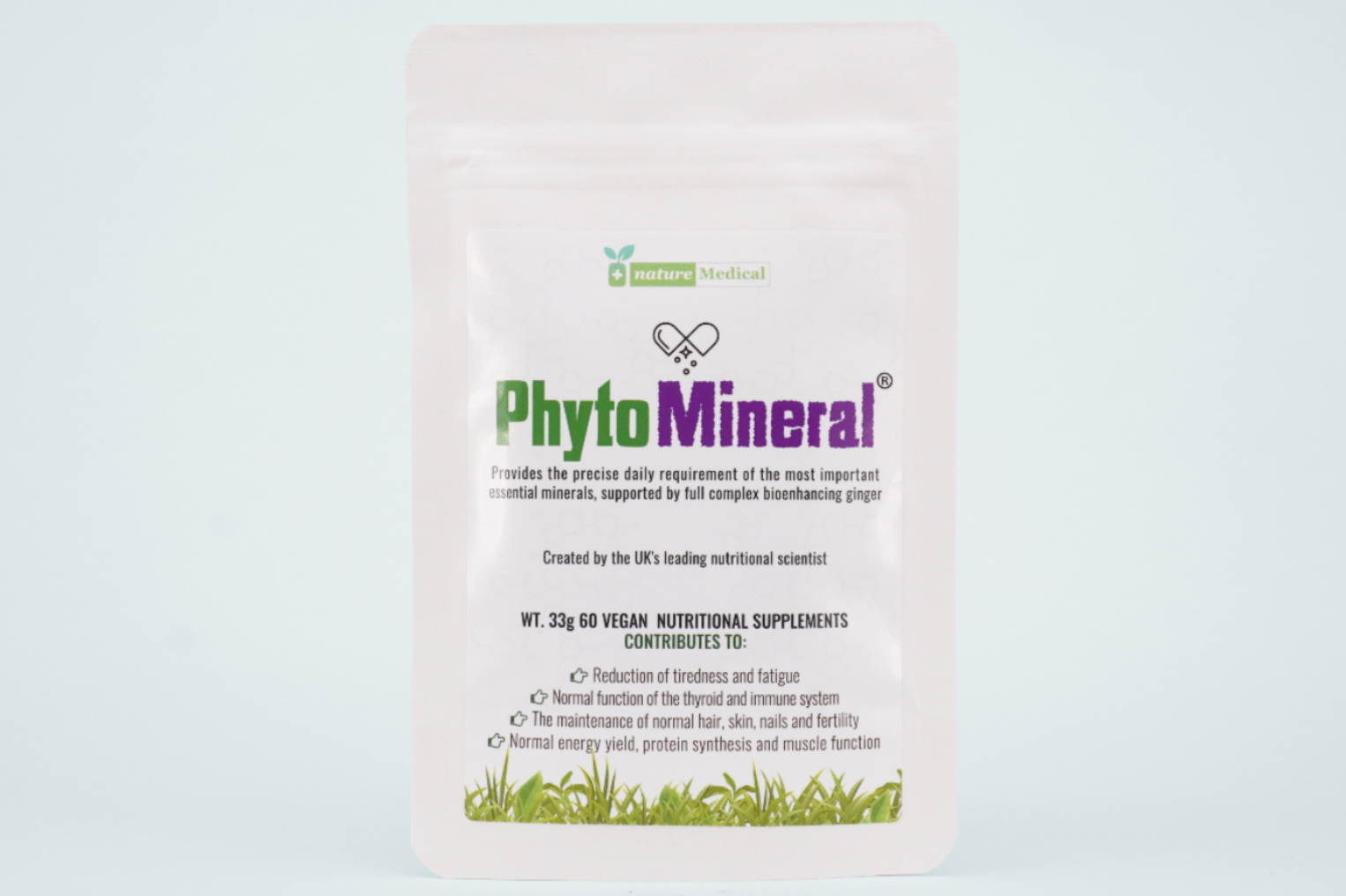
PhytoMineral was developed by a team of nutritional researchers led by Professor Robert Thomas, a specialist in sports and nutritional science. The formulation provides exactly 100% of the recommended daily allowance for a carefully selected group of essential minerals:
- Zinc 11 mg
- Boron 1 mg
- Chromium 0.03 mg
- Selenium 0.07 mg
- Molybdenum 0.04 mg
- Magnesium 300 mg
- Manganese 1.8 mg
- Copper 1 mg
- Iodine 0.14 mg
This precise dosing ensures that levels are optimised without the risk of excess accumulation. Each batch is produced to high manufacturing standards, tested for contaminants, and formulated for both short- and long-term safety.
The Role of Ginger in Mineral Absorption
A unique feature of PhytoMineral is the inclusion of whole ginger (Zingiber officinale Roscoe). Ginger naturally contains minerals such as calcium, zinc, and copper, and has been shown to support gastrointestinal health. It improves motility, reduces mild nausea that can accompany some mineral supplements, and supports antioxidant defences through compounds like gingerols.
Ginger also strengthens the gut lining, reduces inflammation, and enhances nutrient absorption without interfering with drug metabolism. This makes it an ideal complement for improving mineral bioavailability and tolerance.
Quality Assurance and Safety
PhytoMineral is produced in an Oxford facility with top-level Good Manufacturing Practice and Food Safety System certifications. The formulation avoids excessive doses, provides comprehensive trace mineral coverage, and uses ginger to support absorption and gut health. Each batch is screened for impurities and allergens to ensure consistent quality.